


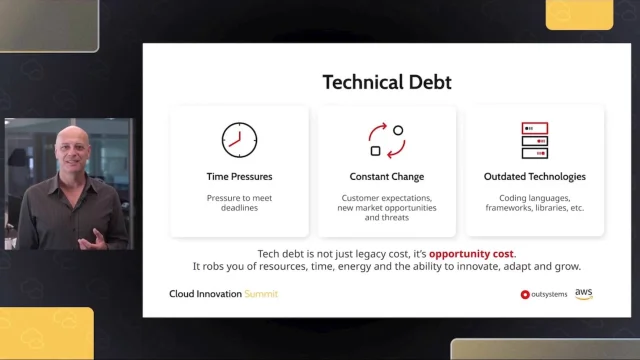
What is technical debt?
Technical debt definition is the consequence of choosing quick and cheap technology solutions over robust and efficient ones. This can happen due to time constraints, budget limitations, or lack of awareness about future needs.
Tech debt goes beyond just a term used in software development – it has significant implications in the business world. Here's what you need to know:
- Future costs and challenges: Like financial debt, technical debt incurs a cost that must be repaid in the future. Additional resources, time, and effort will be needed to address the suboptimal solutions implemented.
- Impact on business operations: Technical debt can have a detrimental effect on enterprise operations. It can lead to inefficiencies, reduced productivity, increased maintenance costs, system failures, and security vulnerabilities. Additionally, it can hinder the organization's ability to adapt to new technologies or market changes.
Examples of technical debt
Outdated software, inadequate documentation, failure to adhere to coding standards, and neglect of employee training are all examples of technical debt. Over time, these shortcuts accumulate, resulting in a fragile and inefficient IT infrastructure.
Types of technical debt
In software development and enterprise IT, technical debt can manifest in different forms, each with its own causes and consequences. By familiarizing yourself with these types, you can effectively begin to manage and mitigate technical debt:
- Code debt: The most common form, resulting from issues within the codebase itself. It encompasses poor coding practices, lack of standardization, inadequate code comments, and outdated or inefficient coding techniques. Code debt can hinder code maintenance and scalability.
- Design debt: Arises from flawed or outdated software architecture or design. This includes overly complex designs, improper use of patterns, and lack of modularity. Design debt can impede scalability and hinder the introduction of new features.
- Documentation debt: Involves insufficient or outdated documentation. This makes it difficult for both new and existing team members to understand the system and the rationale behind certain decisions, impacting efficiency in maintenance and development.
- Testing debt: Occurs when there is a lack of sufficient testing, including unit tests, integration tests, and adequate test coverage. This debt increases the risk of defects and bugs in production, potentially leading to system failures and customer dissatisfaction.
- Infrastructure debt: Connected to the environment in which the software operates, such as outdated servers, inadequate deployment practices, or the absence of disaster recovery plans. Infrastructure debt can result in performance issues and increased downtime.
- Technical skills debt: Arises when the team lacks certain skills or knowledge, leading to suboptimal solutions. Investing in training and development can help alleviate this debt.
- Dependency debt: Arises from reliance on outdated or unsupported third-party libraries, frameworks, or tools. This can expose the software to security vulnerabilities and integration challenges.
- Process debt: Relates to inefficient or outdated development processes and methodologies. This includes poor communication practices, lack of agile methodologies, and insufficient collaboration tools.
- Service/versioning debt: Arises when services or components are not properly versioned, or when legacy systems are utilized without adequate support or integration capabilities.
Each type of technical debt presents unique challenges and necessitates specific strategies for management and resolution. Recognizing and addressing these different forms of debt is crucial for maintaining a healthy and sustainable IT ecosystem within organizations.
Is tech debt bad? Four quadrants of technical debt
To answer this question, it’s helpful to use Martin Fowler's "Technical Debt Quadrant." This quadrant categorizes the type of technical debt based on intent and context.

With this quadrant in mind, technical debt is:
- Prudent and deliberate, when the team knows they are piling up interests. Still, they prefer to ship and deal with the consequences later. This decision is acceptable if the stakes are sufficiently small or the payoff for an earlier release is greater than the costs of the technical debt.
- Reckless and deliberate, when the team may know about the consequences and avoid them, but still prioritizes speed over quality.
- Prudent and inadvertent, when the team learns how the solution should have been implemented after the implementation.
- Reckless and inadvertent, when the team doesn't have the experience and blindly implements the solution. The team doesn't realize they are putting themselves into a gigantic mess.
The left side of this quadrant should be avoided at all costs.
Finding the right balance between speed and quality
Software quality and performance are paramount to a good user experience—and speed is essential for reaching business goals on time. Managing technical debt requires a balance between quality and speed. Quick workarounds might mean you meet your deadlines, but make sure you know the cost. Technical debt may look harmless, but if left unchecked, you'll find that at some point, speed and agility are no longer an option.
Junior developers may lack experience and may be tempted to ignore the debt till it’s piled sky-high. Or they may find it hard to identify and fix. As organizations focus on expediting time-to-market and empowering non-professional developers (citizen developers) to create business apps themselves, the risk of technical debt increases.
Whatever the case, there are ways to reduce and manage technical debt.
How to manage and reduce technical debt
When talking about technical debt, you need to ensure the balance between time, quality, and cost. But keep in mind the governance model, the toolset, and the mindset of the people that are building the software. It's crucial to get the right mix in this equation. And although not exclusive, the right technology can also help.
Companies are increasingly turning to modern technologies, like low-code development platforms to deliver unique, differentiating solutions and avoid the pitfalls of short-term solutions such as technical debt.
That’s the case with OutSystems.
Applications built with OutSystems rely on standard architectures and frameworks–no proprietary components, runtime engines, or interpreters are required. With this in place, technical debt is limited before development even begins.
OutSystems orchestrates the entire deployment process using a combination of automation, AI, and analytics to identify architecture errors, faulty logic, and broken dependencies—during development, in real-time.
To do so, OutSystems offers several functionalities that combined help you reduce technical debt, including:
To learn more about reducing your tech debt from day one, take a look at Handling Technical Debt with OutSystems. This paper discusses how OutSystems helps reduce technical debt during development and assists in building a best-practices architecture to deal with it in the future efficiently.


Technical debt frequently asked questions
Technical debt accumulates through quick-fix solutions, rushed coding, inadequate testing, poor design decisions, and prioritizing short-term goals over long-term quality.
It leads to increased maintenance costs, reduced code quality, slower development, potential system failures, and decreased team morale.
Measure through code quality metrics, time spent on maintenance, and issue tracking. Manage by prioritizing debt reduction in the development process, regular code reviews, and allocating resources for refactoring.
Rushed deadlines, lack of process or standards, insufficient testing, outdated technologies, and inadequate documentation are common causes.
Establish coding standards and processes, allocate sufficient time for testing and refactoring, regularly review code, keep documentation up to date, and consistently prioritize debt reduction in the development process.
Technical debt can lead to bugs and system failures that can directly impact the user experience and cause frustration or loss of trust in the product. It can also impede new features or updates from being deployed, resulting in a lack of innovation and potential loss of customers.
Prioritize debt reduction in the development process, allocate time and resources specifically for paying off debt, regularly review code and identify areas for improvement, and consider investing in tools or technologies that can help automate or streamline the debt reduction process. It's also important to establish a culture of continuous improvement and accountability within the development team.
Clearly explain the concept of technical debt and its impact on the product or project. Provide specific examples and data to illustrate how it may be affecting current operations or future plans. Use visual aids such as diagrams or charts to make complex technical concepts more accessible. Be open to feedback and suggestions from stakeholders on how to address the issue together.
In Scrum, technical debt refers to the compromises made in software development to deliver a product increment quickly, often at the expense of code quality, maintainability, or other technical aspects. This can include rushed coding, skipping automated tests, or neglecting refactoring.