



What is intelligent automation?
Intelligent automation refers to the use of AI, process mining, robotic process automation (RPA), and other technologies to automate repetitive and routine tasks. It’s “intelligent” because these solutions are enhanced with cognitive capabilities allowing them to learn and adapt to changing conditions.
Think of the processes involved when requesting a personal loan. In an analog world, the person requesting it has to fill out numerous paper forms and provide a variety of documents like their ID card and proof of address. Then a clerk needs to validate all that information and manually enter it into the bank’s system. You can imagine how long that takes.
In a world with intelligent automation, you can use RPA, for example, to automatically review information, compare it with bank and public records, and put it all into the system for you. All this in a matter of minutes. Multiply this by 1000, 5000, and 10,000 customers requesting loans. Think of the time and money this saves employees and the bank. And that’s just one of the many benefits of intelligent automation.
What are the benefits of intelligent automation?
There are several benefits companies can reap by applying intelligent automation:
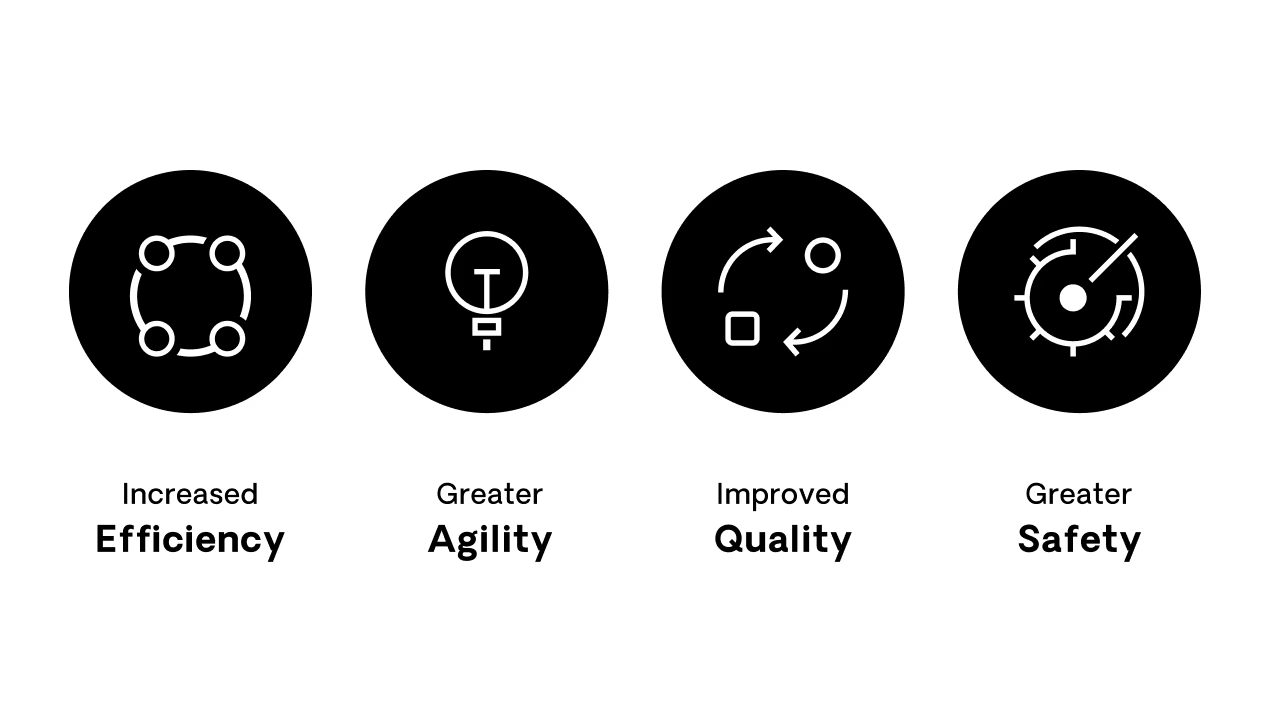
- Increased efficiency: by replacing human and human-based labor with machines and machine-based labor enterprises are able to increase efficiency.
- Greater agility: with IA, organizations can make faster decisions, and respond faster to changes in the market.
- Improved quality: because automation can help reduce variability and errors caused by that, enterprises can achieve higher quality outcomes.
- Greater safety: when automating dangerous tasks, companies can also achieve greater safety.
Intelligent automation challenges
Throughout history, people have been intrigued with the possibilities of automation and entertained by different scenarios involving more intelligent thinking machines.
But to date, companies have had mixed results with intelligent automation. Kobayashi Pharmaceutical is a good example. Although the Japanese company had a combination of RPA tools and spreadsheets that they used to aggregate and analyze product sales data, it still involved a lot of manual work to check for errors from the RPA process.
So, why is it that companies struggle to implement intelligent automation?
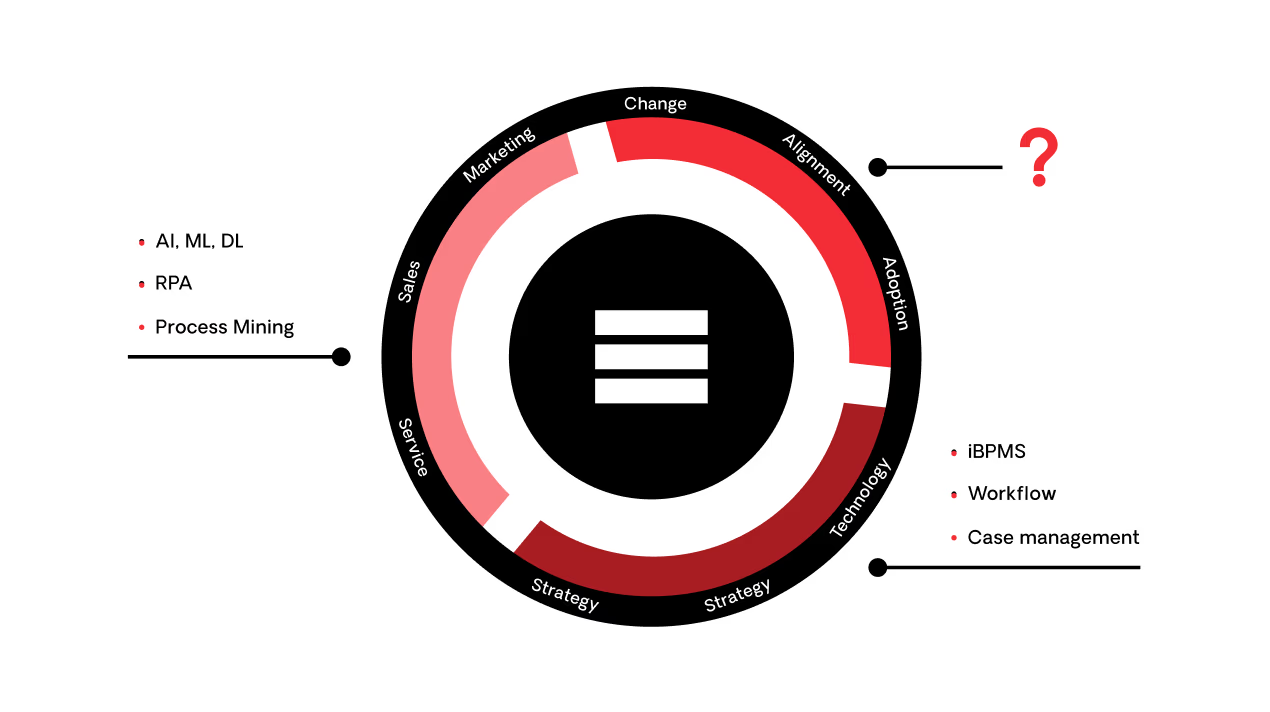
One thing we noticed with all the recent attention on intelligent automation was a lack of focus on people. In the 1990s and early 2000s, there was a lot of interest in processes. There was a growth in business process management tools, workflow management software, and case management frameworks. And in recent years, there has been an increasing interest in technology, especially in advanced technologies, like AI, machine learning, RPA, and process mining.
But it’s almost as if the business process reengineering experts sort of over-rotated on process and technology and forgot about people.
Technology can help us improve people’s lives. So too can intelligent automation, but not if it’s used without people in mind.
That led to thinking about a better way to leverage intelligent automation technologies, a smarter way that took a more human approach, one that looked holistically at how people, processes, and technology worked together to help us achieve business goals.
3 principles for a successful intelligent automation implementation
Setting up business process automation initiatives for success means following three crucial principles:
- To be human-centered: Get people, processes, and technologies working together to help achieve business goals.
- To be transformative: Start with the business goals to help inform which technologies in practice are a good fit or match the business goals companies are trying to achieve.
- To be adaptive: Consider the dynamic, changing nature of our world. Things rarely stay the same. Smarter automation should consider this ever-changing business and competitive landscape and be able to adapt and change with it.
Doing intelligent automation the right way
If you want to learn more about how to successfully implement intelligent automation, take a look at the session Re-Examining Intelligent Automation. In this insightful webinar, international distributor Redington Gulf shares its experience of how they optimized the company optimized its business processes holistically for a longer-term sustainable competitive advantage.


Intelligent automation frequently asked questions
While intelligent automation refers to the use of various technologies, such as robotic process automation (RPA) and machine learning, to automate and optimize business processes, artificial intelligence is a broader concept that encompasses the development of machines or systems that can perform tasks that typically require human intelligence.
Intelligent Process Automation refers to the use of advanced technologies, including artificial intelligence (AI) and machine learning (ML), in combination with traditional automation capabilities to automate and optimize business processes.
RPA is a technology that uses software robots or "bots" to automate repetitive, rule-based tasks. It mimics human interactions with digital systems by interacting with user interfaces, manipulating data, and executing tasks within applications. On the other hand, Intelligent Automation is a broader concept that combines traditional RPA with additional cognitive technologies such as machine learning, natural language processing, and decision-making algorithms.