How one team at HEINEKEN is scaling app development worldwide
HEINEKEN, one of the world’s most iconic beer brands, is driving a company-wide strategy called EverGreen to future-proof its business and meet the demands of a fast-changing world.
With big development needs and even bigger goals, HEINEKEN rolled out a federated development model with the support of platforms like OutSystems. With this model, the brewing company has successfully scaled app development globally while maintaining the company’s high security and quality standards across every solution.
1 million
hours to give back to the organization25+
potential decentralized teamsOne
central teamDiscover OutSystems
Challenge
The clock is ticking:
T-minus one million hours
As a leading brewer for over 150 years, HEINEKEN knows a thing or two about thriving in a changing world. After the disruptive beginning of the 2020s, HEINEKEN rolled out a company-wide strategy to make its business more resilient and adaptable—the EverGreen strategy. This strategy centers around customer centricity, productivity, and urgent business digitalization.
“The EverGreen strategy translates into becoming the best-connected brewer,” described Mark Sleijpen, Global Digital Technology Toolkit Manager. “This strategy comprises several elements, one of them being the use of hyperautomation to support our productivity and digitalization ambitions.”
Among several goals, these ambitions translate into giving back one million hours to the organization by the end of 2025 and supporting the overall digitalization of the company. This means thousands of tasks must be automated, and many more processes must be digitized across the 80+ operating companies (OpCos) worldwide.
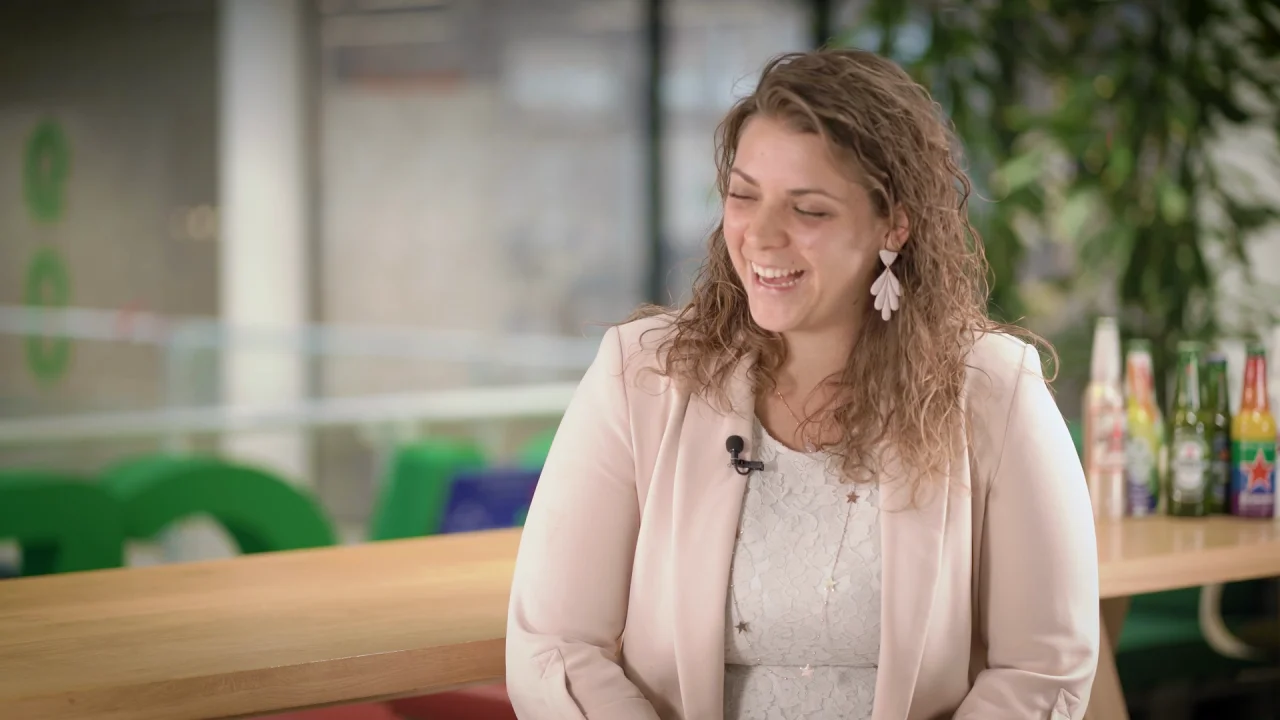
“To support our productivity and digitalization goals, we brought in multiple technologies, namely document technology, conversational AI, and low-code,” said Giada Binelli, Global Low-Code Product Owner.
However, a big question remained: How could HEINEKEN support the 80+ OpCos needs without massively growing its IT team?
"As part of EverGreen's productivity and digitalization pillars, we integrated several platforms, including Power Apps and OutSystems. We see them as complementary solutions: one is more suitable for internal solutions, the other for next-level UX."
Giada Binelli Global Low-Code Product Owner HEINEKEN

Solution
A federated development model
The answer was a federated development model.
In this model, the central, global product team led by Giada manages and provides the development platforms for decentralized units to build solutions autonomously in a governed way. This means the central team is responsible for providing the tools, guidelines, and developing new features and capabilities for the decentralized teams to build solutions as securely and efficiently as possible.
“We focus on building strong connections with our customers, consumers, and colleagues worldwide,” said Florieke Bogaarts, Lead for OutSystems Apps Delivery. “And that’s where the federated development model and low-code come in.”
The central team is also responsible for everything related to the governance, maintenance, and evolution of the platforms.
“We take care of the governance, security, and infrastructure of platforms like OutSystems,” explained Giada. “But we also provide reusable components and templates for HEINEKEN’s employees to develop the apps they need. In the end, the federated teams become an extension of the central team.”
"The central team acts as a beta user responsible for polishing the platforms. This way, we can keep them relevant and fit-for-purpose for other federated teams over the globe."
Florieke Bogaarts Lead for OutSystems Low-Code Apps Delivery HEINEKEN

To support this model, HEINEKEN leverages a selected group of technologies that offer the following capabilities:
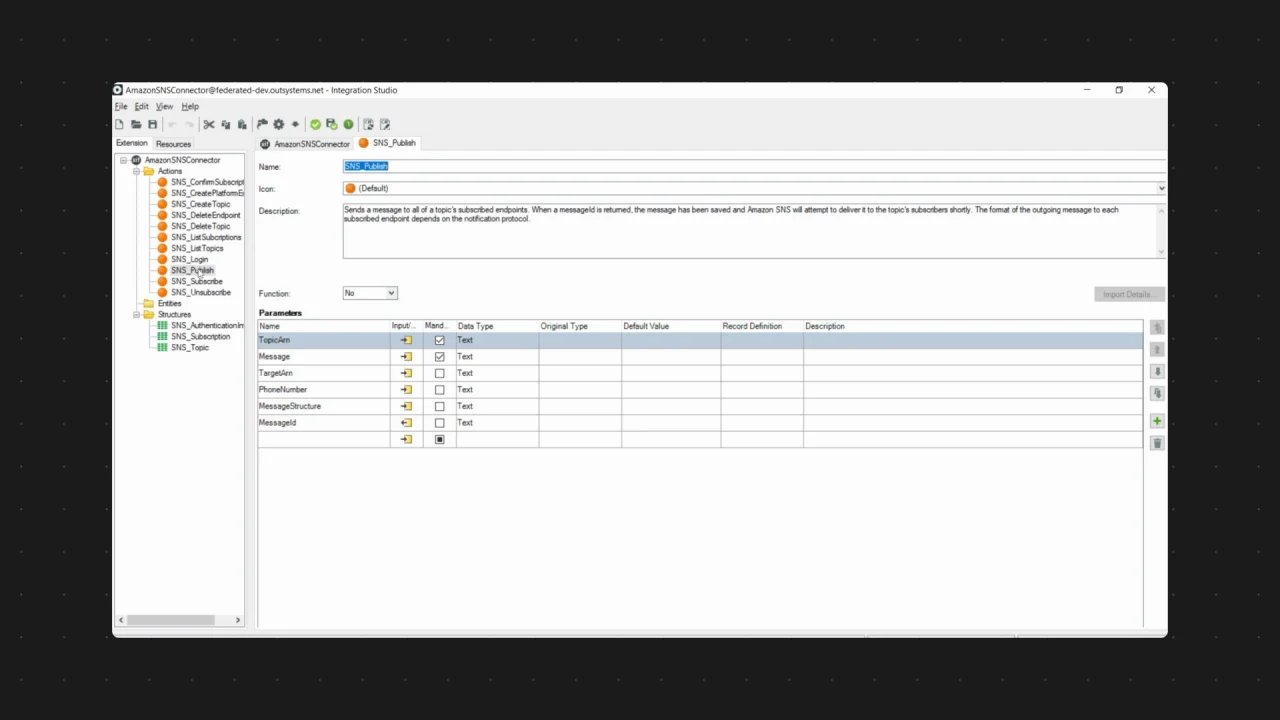
- Reusable components: To allow decentralized units to quickly build solutions using code curated by the central team.
- Easy customizations: To allow regional teams to easily customize components provided by the central team and meet different languages, local preferences, and legal requirements.
- Superior UX/UI: To enable the development of visually appealing and user-friendly applications.
"With tools like OutSystems, we can reuse components from previous apps. So, 80% of a new app is already built before we even start. That’s the strength of our development model."
Giada Binelli Global Low-Code Product Owner HEINEKEN

How to set up a global federated model
Here's how this model works: business units submit their ideas through an ideation portal. The central team then assesses each idea and decides whether the business unit or the central team should develop it depending on the app’s complexity and if the business unit already has an associated federated team.
“If a business unit has a roadmap of use cases to develop, that’s when we train them to become a federated team, as they will be committed to investing in the capabilities in the long term,” said Giada.
To develop their solutions, business units have access to an internal library of components and templates curated by the central team. The latter also supports development by answering questions and reviewing the final app from a security and compliance standpoint.
"The key to our success is the internal community we’ve created. We organize user groups where we share the principles to help these decentralized teams grow and be successful."
Praveen Natarajan Technical Lead OutSystems HEINEKEN

If the app is more complex or the business units lack a federated team, the central team builds the solution. The process always starts with a design thinking session involving end-users, developers, and designers, ensuring a tight relationship between stakeholders and development.
"People often don't know what they want. Design thinking sessions improve business and IT communication while keeping us agile. Then, with low-code, we can quickly create something, get feedback, and make changes in minutes."
Remco Brilstra Product Architect HEINEKEN

Results
Scaling development with peace of mind
With this federated model, HEINEKEN can scale app development with the confidence that all apps meet the company’s high standards.
“One of the unique aspects of this model is that all federated teams are responsible for reviewing each other’s work,” said Florieke. “This approach ensures that when a component is reused, it has already gone through several quality assurance checks, which speeds up the review process while giving us confidence in the quality of the apps.”
"The more teams engage in this model, the richer our expertise, user insights, and shared component library becomes. The reinvention of the wheel becomes something from the past."
Florieke Bogaarts Lead for OutSystems Low-Code Apps Delivery HEINEKEN
But it’s not just quality that HEINEKEN gains from reusability. It also benefits from cost efficiency, and having a team oversee all development prevents repetitive work and tech sprawl.
Giada explained: “We link teams together. If the French team needs a solution similar to one built by the German team, we can tell them, ‘That’s already built; here it is for you to reuse.’” She concluded:
"You invest so much time in developing a solution. With low-code, you can reuse that app. So every new app we deliver is an investment for future development."
Giada Binelli Global Low-Code Product Owner HEINEKEN
About HEINEKEN
- Amsterdam, the Netherlands
- 85,000+ employees
-
Strategic goals
- Customized Digital Experiences
- Agile Culture & Dev at scale
- Automation & Efficiency
-
Application type
- Experiences
- Efficiencies
Discover OutSystems